
Views: 0 Author: Site Editor Publish Time: 2026-07-10 Origin: Site


Foam generation represents a critical failure mode in both industrial and automotive lubrication systems today. Left unchecked, these pervasive bubbles lead directly to catastrophic equipment wear, pump failure, and rapid fluid degradation. To combat this destructive issue, formulators rely heavily on a specialized Antifoam Agent. We define this vital chemical tool as a surface-active additive engineered specifically to destabilize and rupture surface foam across various base oil matrices.
Applying the wrong chemistry, however, can systematically damage the entire fluid system. This article serves as a comprehensive technical guide for formulators, reliability professionals, and maintenance engineers. You will discover exactly how to evaluate, select, and implement the correct defoaming technology for your specific application. We will explore practical methodologies to eliminate foam completely without compromising secondary fluid properties like air release or demulsibility.
Foam in lubricants accelerates oxidation, causes pump cavitation, and reduces load-carrying capacity.
An effective antifoam agent must be carefully balanced—it must be insoluble enough to migrate to the foam interface, but dispersible enough to remain stable in the fluid.
The choice between a silicone antifoam additive and acrylate-based alternatives depends heavily on the base oil type, operating temperature, and air release requirements.
Over-treating a formulation with defoamers often creates worse problems, such as trapping entrained air within the fluid bulk.
Operators frequently misunderstand the physical nature of aeration inside a fluid system. To solve aeration issues, you must first distinguish between surface foam and entrained air. Surface foam consists of large bubbles gathering at the fluid-air interface inside a reservoir. Entrained air consists of microscopic bubbles suspended entirely within the fluid bulk. An Antifoam Agent targets surface bubbles exclusively. It does not resolve entrained air issues.
Uncontrolled surface foam creates severe mechanical consequences for running equipment. When excessive foam builds up, it spills out of breathers and sight glasses. More importantly, it directly compromises the physical properties of the lubricant.
Cavitation: When foam gets drawn into high-pressure hydraulic pumps, the bubbles violently collapse. This implosion generates microscopic shockwaves and localized fluid jets. These jets strike internal pump surfaces, causing severe fatigue pitting and premature mechanical failure.
Thermal Degradation: Air functions as a highly effective thermal insulator. Aerated oil loses its ability to conduct and dissipate heat away from friction zones. The resulting trapped heat rapidly accelerates base oil oxidation, leading to sludge and varnish formation.
Loss of Lubricity: Bearings and gear sets require a continuous, incompressible hydrodynamic fluid film to keep metal surfaces separated. Foam compresses under load. This compression breaks the fluid film, causing immediate metal-on-metal contact and rapid wear.
Formulators judge a successful additive integration based on strict criteria. A high-quality formulation eliminates surface foam rapidly under high-shear conditions. At the same time, it must not negatively impact the lubricant’s Demulsibility (water separation) or Air Release values. Maintaining this delicate balance determines the ultimate operational success of the fluid system.
Understanding how these chemicals actually destroy bubbles requires looking closely at fluid interfaces. The entire function of these additives relies on the insolubility principle. To work correctly, the agent must possess a significantly lower surface tension than the base oil itself. Furthermore, it must remain strictly dispersed rather than completely dissolved.
If an additive dissolves entirely into the base oil matrix, it simply becomes part of the bulk fluid. It loses all ability to seek out and attack the foam interface. Conversely, if it separates too aggressively, it drops out of suspension and settles at the bottom of the drum. The agent must form stable micro-droplets that stay evenly distributed throughout the fluid.
When bubbles rise to the surface, they form a thin liquid film called the lamella. The destruction of this bubble wall follows a specific physical sequence.
Migration: The dispersed micro-droplets naturally seek out areas of high surface energy. They migrate rapidly from the bulk fluid directly into the foam lamella.
Penetration and Spreading: Upon entering the bubble wall, the additive immediately alters the localized surface tension gradient. The low-surface-tension droplet spreads across the higher-surface-tension oil film.
Thinning and Rupture: This rapid spreading action forces the surrounding oil to flow away from the droplet. The lamella experiences extreme localized thinning. The bubble wall eventually loses its mechanical elasticity and ruptures violently, releasing the trapped gas into the atmosphere.
This mechanism occurs continuously across thousands of bubbles simultaneously. By weakening the structural integrity of the foam layer, the additive forces rapid collapse before the bubbles can multiply and overflow the reservoir.
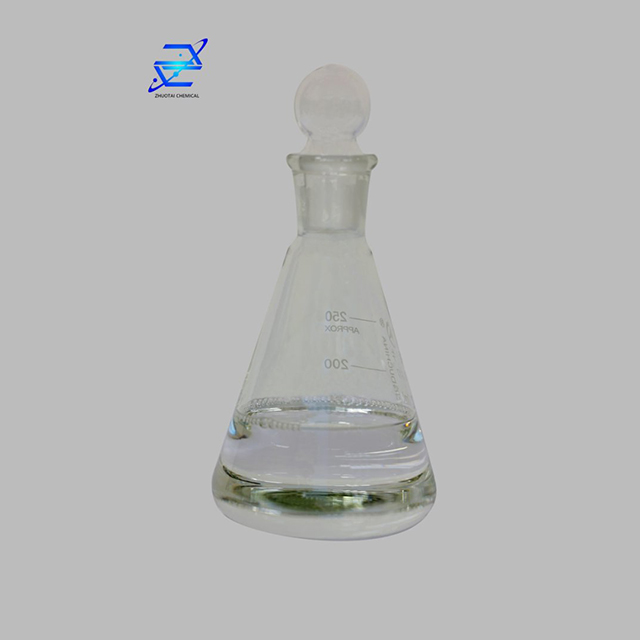
The lubricant industry relies primarily on two distinct chemical families to control foam. Formulators must choose between silicone-based compounds and organic alternatives based on the specific demands of the target application. Making the wrong choice often leads to catastrophic fluid performance.
Polydimethylsiloxanes (PDMS) represent the standard silicone antifoam additive category. These compounds are exceptionally surface-active. Because of their immense chemical efficiency, they require extremely low treat rates. Formulators frequently use them at concentrations below 10 parts per million (ppm). They dominate standard applications like engine oils, heavy-duty gear oils, and general-purpose hydraulic fluids.
Despite their power, silicone additives carry specific trade-offs. Their inherent insolubility makes them prone to settling out of the fluid during long-term storage. Furthermore, aggressive over-use of a silicone formulation actively traps entrained air inside the fluid bulk, ruining system responsiveness.
Organic or non-silicone alternatives typically utilize polyacrylates or complex copolymers. These chemicals function differently at the fluid interface. They are generally less prone to interfering with the lubricant's natural air release properties compared to siloxanes. This makes them absolutely mandatory for high-performance systems.
Turbine oils, compressor oils, and precision hydraulic systems mandate rapid air separation. In these environments, entrained air causes immediate control lags and severe oxidation. Non-silicone formulations protect these critical air release values. However, they require significantly higher treat rates to achieve adequate defoaming, which inherently raises formulation costs.
Chemistry Type | Typical Treat Rate | Primary Advantage | Major Trade-off | Best Use Cases |
|---|---|---|---|---|
Silicone (PDMS) | 1 - 15 ppm | Highly efficient at low doses | Can trap entrained air if overused | Engine oils, standard hydraulics, gear oils |
Organic (Polyacrylates) | 100 - 500 ppm | Protects rapid air release values | Higher required treat rates | Turbine oils, compressor fluids |
Selecting the right chemical package requires rigorous empirical testing. You cannot rely on chemical theory alone when formulating a new fluid. Industry professionals utilize specific standardized testing protocols and compatibility matrices to validate their choices.
The recognized benchmark for evaluating foaming characteristics is the ASTM D892 standard. This rigorous laboratory test pushes the lubricant through three distinct thermal sequences. Sequence I evaluates foam generation at 24°C. Sequence II raises the temperature to 93.5°C to observe high-temperature performance. Finally, Sequence III cools the fluid back down to 24°C.
Running all three sequences proves the thermal stability of the additive. Many low-quality formulations perform adequately at room temperature but completely fail during Sequence II. Even worse, some additives drop out of suspension entirely during Sequence III, proving they cannot handle real-world thermal cycling.
Beyond standardized foam testing, engineers must carefully assess additive compatibility. Modern lubricants contain complex blends of detergents, dispersants, anti-wear agents, and extreme pressure (EP) additives. These chemicals often compete for space at fluid interfaces. High-potency dispersants, designed to encapsulate soot, sometimes mistakenly encapsulate the defoamer droplets. This chemical interference completely neutralizes the defoaming action, causing sudden system overflows.
Filtration tolerance represents another critical evaluation dimension. Modern industrial hydraulic systems rely on extremely fine filtration, often trapping particles smaller than 5 microns. Because defoamers rely on forming insoluble micro-droplets, tight filters can physically strip the agent right out of the oil. Formulators must carefully engineer the particle-size distribution of their defoamer to ensure the droplets remain small enough to pass through fine filter media without losing their surface-active properties.
Field implementation often reveals unexpected challenges that laboratory tests miss. Experience shows that human error drives the most frequent failures in foam control. Maintenance teams and inexperienced formulators frequently fall victim to the over-treating paradox.
When an operator notices severe surface foam, their immediate reaction involves pouring in excess defoamer. This intuitive response actively destroys the fluid system. Adding excessive amounts of a surface-active chemical lowers the bulk surface tension of the entire oil matrix too far. When this happens, microscopic entrained air bubbles lose their ability to merge together into larger, buoyant bubbles.
Instead of rising to the surface and bursting, these tiny bubbles remain permanently trapped in suspension. The fluid bulk turns opaque and spongy. This destroys hydraulic stiffness, causing immediate erratic actuator movements and severe pump cavitation. Fixing surface foam by creating an entrained air problem is the most common and destructive formulation error in the industry.
Shear degradation introduces another hidden risk. High-stress environments, particularly heavy-duty industrial gearboxes, subject the oil to extreme mechanical forces. As the oil passes through the gear teeth, these forces physically shear and break the long polymer chains of the defoaming additive. Over time, the molecular weight of the additive drops, and its performance steadily degrades. A fluid that passes ASTM D892 on day one might fail completely after a month of heavy operation.
Finally, solubility shifts plague many applications. Fluid systems experience massive temperature fluctuations between cold startups and peak operating loads. Extreme cold forces the dispersed micro-droplets to cluster together (agglomeration) and drop out of suspension. Conversely, extreme heat can cause the agent to become entirely soluble within the base oil. In both scenarios, the agent vanishes from the fluid interface, leaving the system completely unprotected against rapid foam buildup.
Mastering foam control requires a deep understanding of fluid physics and chemical interactions. Your selection process must carefully balance treat rate efficiency against strict air release requirements. If your system prioritizes low-cost, high-efficiency foam knockdown, a silicone antifoam additive generally offers the best performance. However, if your application involves high-speed turbines or compressors where trapped air causes catastrophic failure, you must pivot to non-silicone, acrylate-based solutions.
Before executing any system-wide changes, formulators must initiate rigorous bench testing. Begin by running the full ASTM D892 three-sequence protocol using your exact base oil and full additive package. Never test defoamers in isolation. Next, request detailed technical data sheets (TDS) and representative samples from reputable specialty chemical suppliers. Conduct proper compatibility and filtration studies in the lab before moving to any live field trials. Taking these deliberate steps ensures long-term fluid stability and protects critical rotating equipment from aeration damage.
A: Silicone-based formulations are exceptionally potent and require very small doses. Formulators typically deploy them at treat rates ranging from 1 to 15 parts per million (ppm). Exceeding these low concentrations rarely improves surface foam reduction and significantly increases the risk of trapping entrained air inside the fluid bulk.
A: Technically, defoamers are added to knock down existing foam that has already formed on the surface. Antifoams are proactive chemicals blended into the oil to prevent foam from forming in the first place. However, in modern lubricant formulation contexts, professionals use the terms interchangeably to describe the same chemical additive.
A: Yes, they absolutely can. Because these agents function by forming insoluble micro-droplets rather than fully dissolving, tight mechanical filters can trap them. Systems utilizing aggressive filtration below 5 microns frequently strip silicone droplets out of the base oil if the fluid was not engineered with the correct particle size distribution.
A: Several variables cause this failure. The additive may have agglomerated and dropped out of suspension due to cold temperatures. It might have been stripped by tight filtration. Alternatively, severe contamination from water or system cleaners can introduce powerful foaming tendencies that simply overwhelm the existing chemical protection.


