
Views: 0 Author: Site Editor Publish Time: 2026-06-25 Origin: Site


Hydraulic system failure often feels like an unavoidable mechanical breakdown. Yet, we know it rarely starts at the hardware level. It almost always begins as a preventable fluid chemistry degradation issue. Unplanned downtime and emergency pump replacements bring massive financial pain to modern operations. Modern hydraulic fluids look surprisingly simple at first glance. They consist of up to 99% raw base oil. However, the remaining 1% to 5% dictates everything. This small chemical fraction establishes operational limits. It controls fluid lifespan. It thoroughly defines the protective capabilities of your entire equipment network.
This guide breaks down exactly how to evaluate your options. You will learn how to select the right additive chemistry. We will show you how to deploy these solutions correctly. Proper deployment mitigates wear and extends fluid life. You can easily meet stringent OEM requirements using this targeted approach.
A hydraulic oil additive package bridges the performance gap between raw base oils and the extreme pressure/temperature demands of modern equipment.
The inclusion of a specialized anti-wear hydraulic oil additive (like ZDDP or ashless alternatives) is the primary defense against internal pump and valve friction.
Selecting the right package requires matching chemical compatibility with operational triggers: extreme temperatures, heavy loads, or environmental compliance mandates.
Evaluating fluid upgrades should always prioritize OEM specification compliance (e.g., Bosch Rexroth, Parker Hannifin) and verifiable lab data over generalized marketing claims.
Raw base oils cannot survive inside modern hydraulic equipment alone. Refiners categorize neat base stocks into Groups I through IV. These base fluids provide excellent volumetric power transmission. They also offer foundational viscosity. However, they lack the chemical resilience needed for extreme conditions. High-pressure systems often exceed 3,000 PSI continuously. Such extreme environments destroy unprotected base oils rapidly. Friction generates localized heat spots. Pressure forces oxygen into the fluid matrix. These forces inevitably overwhelm the natural oxidative stability of neat oils.
Thermal degradation represents the most common failure mode. High operating temperatures break down hydrocarbon chains. This breakdown creates insoluble byproducts known as sludge. Over time, these byproducts bake onto metal surfaces as varnish. Varnish acts like an insulator. It prevents heat dissipation and traps contaminants. This buildup directly leads to valve stiction. Valves begin sticking open or closed unreliably. Erratic system performance follows immediately.
Cavitation and micro-dieseling present another major threat. Base oils naturally entrain air bubbles during circulation. Poor air release properties allow these bubbles to reach high-pressure zones. The bubbles implode violently against metal surfaces. We call this phenomenon cavitation. Sometimes, the compressed air bubble ignites the surrounding oil mist. This microscopic explosion is micro-dieseling. Both events blast tiny craters into metal components. They also generate severe localized heat.
Accelerated component wear occurs through boundary lubrication failure. Fluid films thin out under heavy loads. Metal-to-metal contact becomes inevitable without chemical intervention. Raw base oils simply squeeze out of the load zone. Pumps and motors destroy themselves quickly under these conditions. A successful fluid formulation fundamentally solves these issues. It measurably reduces maintenance intervals. It lowers component replacement rates drastically. It maintains reliable viscosity stability under severe loads.
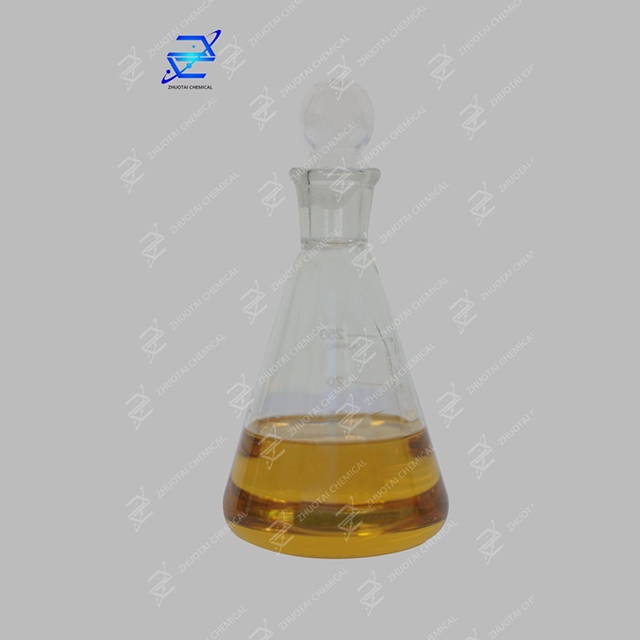
Engineers design a Hydraulic Oil Additive Package to tackle distinct mechanical challenges. These chemical blends represent precision engineering. They operate entirely in the background. Yet, they determine whether a pump lasts one year or ten years. We must break down these solution categories. Understanding their features reveals their specific outcomes.
The foremost component is the anti-wear chemistry. Zinc dialkyldithiophosphate (ZDDP) dominates this category globally. This zinc-based additive reacts under heat and pressure. It forms a protective, glass-like sacrificial film. This film coats sliding metal surfaces perfectly. When friction occurs, the sacrificial film wears away instead of the steel. Ashless alternatives utilize sulfur-phosphorus compounds to achieve similar results. They provide equivalent protection while offering better environmental compatibility.
Antioxidants serve as the primary fluid lifespan extenders. We primarily use phenolic and aminic chemistries here. Heat and oxygen exposure generate highly reactive free radicals inside the oil. These radicals attack healthy oil molecules aggressively. They trigger a cascading oxidation chain reaction. Phenolic and aminic antioxidants act as radical scavengers. They sacrifice themselves to neutralize free radicals immediately. This process actively prevents fluid thickening and extends drain intervals significantly.
Rust and corrosion inhibitors protect internal hardware from water contamination. Complete moisture exclusion remains impossible in industrial environments. These chemical inhibitors feature polar molecular heads. These heads attach firmly to yellow metals and iron surfaces. Their non-polar tails point outward into the oil. This polarization process creates a dense microscopic barrier. Water droplets physically cannot touch the protected metal substrate.
Antifoam agents and demulsifiers manage surface tension anomalies. Antifoam chemistries weaken the surface tension of air bubbles. This modification causes surface foam to collapse rapidly. It severely limits pump cavitation risks. Demulsifiers perform a similar surface-tension modification for water droplets. They force entrained water molecules to coalesce into larger drops. These larger drops then separate out of the oil quickly. Technicians can drain this separated water from reservoir bottoms easily.
Component Type | Primary Chemistry | Operational Mechanism | System Outcome |
|---|---|---|---|
Anti-Wear | ZDDP / Sulfur-Phosphorus | Forms sacrificial surface films | Prevents boundary lubrication wear |
Antioxidant | Phenolic / Aminic | Neutralizes free radicals | Prevents sludge and varnish |
Corrosion Inhibitor | Polar organic compounds | Polarizes on metal substrates | Stops water-induced rusting |
Demulsifier | Surface active agents | Modifies fluid surface tension | Accelerates water separation |
Recognizing when standard formulations fail ensures optimal equipment reliability. You cannot rely on visual inspections alone. You must evaluate specific operational scenarios constantly. These scenarios act as clear triggers. They signal your existing fluid formulation is no longer sufficient. We classify these triggers into three distinct evaluation dimensions.
Higher System Pressures and Compact Designs: Modern equipment utilizes significantly smaller fluid reservoirs. Engineers do this to save weight and space. However, smaller reservoirs severely limit fluid dwell time. The oil rushes back into the pump almost immediately. It lacks adequate time for proper air release. It lacks sufficient time for heat dissipation. Standard fluids foam heavily in these compact systems. Upgraded chemistry manages rapid air release efficiently under these conditions.
Extended Drain Interval Mandates: Maintenance teams face constant pressure to extend service intervals. Moving from a standard 2,000-hour fluid life goal is difficult. Pushing toward 5,000 or even 8,000 hours requires robust chemistry. Standard oxidation inhibitors deplete far too quickly. They cannot survive multi-year duty cycles. Upgrading becomes mandatory to prevent catastrophic mid-cycle varnish formation. You need advanced aminic antioxidant reserves to handle these extended intervals safely.
Harsh Environment Operations: Extreme external factors overwhelm basic hydraulic fluids routinely. High water ingress risks define coastal or mining applications. Extreme ambient temperature fluctuations destroy fluid viscosity stability quickly. Dust-heavy operations require superior contaminant handling capabilities. Standard formulations struggle to isolate and drop out fine particulate matter. Upgraded fluids encapsulate dirt better. They also separate bulk water much faster in highly humid environments.
You must map your specific equipment challenges against these triggers. Ignoring a trigger accelerates hardware degradation predictably. A simple chemistry upgrade often solves chronic mechanical headaches completely. It directly mitigates the underlying root causes of failure.
Selecting superior chemistry demands a logical decision framework. You must navigate a complex marketplace of chemical claims. Buyers often choose incorrectly based on price alone. You must compare options through strict technical parameters instead. Your shortlisting logic must prioritize compatibility and proven performance data.
The first major decision involves choosing between ash and ashless chemistries. Zinc-based packages dominate heavy-duty mobile equipment applications. Zinc provides legendary boundary wear protection. It handles shock loads exceptionally well. However, zinc creates ash deposits under extreme thermal stress. Ashless packages eliminate zinc entirely. They utilize advanced sulfur-phosphorus formulations. Ashless technology offers superior thermal stability. It generates zero ash deposits in high-heat zones. It also satisfies strict environmental compliance mandates for sensitive ecological areas.
Ash vs. Ashless Comparison Chart | ||
Feature Dimension | Zinc-Based (Ash) | Zinc-Free (Ashless) |
|---|---|---|
Wear Protection Level | Excellent under extreme shock loads | Very good for continuous high pressure |
Thermal Stability | Moderate (Can form ash deposits) | Excellent (Zero ash formation) |
Environmental Profile | Standard / Non-biodegradable | Highly compatible with eco-mandates |
Filterability | Prone to calcium-zinc interaction | Exceptional fine-micron filterability |
Base oil compatibility represents your next critical evaluation step. An additive must remain fully soluble inside its host fluid. You cannot mix incompatible chemistries safely. Highly refined Group II base oils accept certain packages easily. Synthetic Group IV polyalphaolefins (PAO) demand highly specialized solubility agents. Mismatching solubility causes additives to drop out of suspension entirely. They accumulate uselessly at the reservoir bottom.
You must rigidly demand OEM approvals and verifiable industry standards. Never accept generalized marketing claims. Instruct your purchasing teams to verify data physically. Check for compliance with ISO 11158 categories (HM or HV). Demand proof of DIN 51524 conformity (Part 2 HLP or Part 3 HVLP). You must also verify specific pump manufacturer approvals. Bosch Rexroth and Parker Hannifin publish stringent fluid testing standards. Approval from these giants guarantees fluid competence entirely.
Fluid deployment carries inherent operational risks. You must approach implementation through a highly skeptical lens. Formulating high-performance oil requires precise chemical balance. Field implementation often disrupts this delicate balance unexpectedly. You must recognize these realities to prevent disastrous outcomes.
The danger of top-treating warrants immediate attention. Many operators arbitrarily pour aftermarket chemical boosters into finished fluids. They assume more chemistry equals better protection. This assumption is deeply flawed. Finished fluids exist in a state of delicate chemical equilibrium. Pouring extra chemicals into the reservoir disrupts this balance instantly. Additives begin fighting each other for metal surface space. We call this chemical antagonism. It routinely causes severe additive dropout. The expected performance boost never actually materializes.
Filterability issues destroy fluid flow in contaminated systems. Some incompatible additive packages react poorly with fine-micron filtration. Excessive anti-foam usage is particularly dangerous here. High anti-foam concentrations stick to filter media pores. They blind the filter completely. Furthermore, zinc-based packages often react with calcium contaminants in wet conditions. This reaction forms sticky metallic soaps. These soaps clog sensitive servo-valve filters within hours.
We recommend establishing strict rollout best practices before any changeover. Transitioning fluids safely requires systematic laboratory procedures.
Perform ASTM Compatibility Testing: Always run ASTM D7155 tests before mixing fluids. This verifies the old and new chemistries will not form dangerous precipitates.
Establish Baseline Fluid Analysis: Implement routine oil condition monitoring. Capture baseline viscosity, acid number, and particle counts before the upgrade.
Execute Full System Flushes: Never just drain and fill. Use dedicated flushing fluids to remove trapped varnish and depleted chemistry from lines.
Monitor Initial Filter Deltas: Watch filter differential pressure gauges closely during the first 48 hours of operation.
Following these specific practices guarantees a seamless transition. Skipping them guarantees unpredictable system downtime.
We must recognize that a hydraulic oil additive package is a precision-engineered chemical toolset. It is never a generic commodity. The chemistry dictating your system protection requires careful selection and rigorous deployment. It forms the unseen barrier between efficient operation and catastrophic hardware failure.
Decision-makers must take proactive next steps today. Start by auditing your current hydraulic failure logs thoroughly. Identify patterns involving sticking valves, excessive pump wear, or short fluid lifespans. Consult immediately with a dedicated formulation chemist or a highly reliable fluid partner. Request detailed technical data sheets (TDS) for comprehensive comparative evaluation. Upgrading your fluid chemistry is the most direct path to maximizing operational reliability.
A: An additive package is the highly concentrated raw chemical ingredient formulation. Chemical manufacturers design it to deliver specific performance traits. A finished hydraulic fluid is the final blended product sold to end-users. It consists of the additive package fully dissolved into a selected base oil (usually 95% to 99% of the volume).
A: Depletion rates vary wildly based on operational severity. Operating temperature is the primary driver. Fluids running above 140°F deplete chemistry much faster. High water contamination and extreme oxidation levels also consume these additives rapidly. Most well-maintained systems see effective anti-wear protection for 2,000 to 5,000 hours before critical depletion occurs.
A: You should avoid mixing different oils whenever possible. Mixing introduces severe risks of chemical antagonism. Different additive packages often react negatively with one another. This clash can cause crucial protective chemicals to drop out of suspension. It frequently accelerates varnish creation and completely destroys the fluid's ability to separate water.


