
Views: 0 Author: Site Editor Publish Time: 2026-02-18 Origin: Site


You need antioxidants to protect your cells and boost your overall health. Antioxidant compounds help your body fight oxidative stress, which comes from everyday metabolic processes and environmental exposure. When you eat a diet full of fruits and vegetables, you lower your risk of disease and support healthy aging. You can easily add more antioxidants to your daily routine and see positive changes in your well-being.
Antioxidants neutralize free radicals.
Whole foods rich in antioxidants support overall health.
Fruits and vegetables are the best sources for a strong body.
Antioxidants protect your cells by neutralizing harmful free radicals, reducing the risk of disease.
Eating a variety of colorful fruits and vegetables boosts your overall health and supports healthy aging.
Whole foods provide the best source of antioxidants; supplements may not offer the same benefits.
Incorporate antioxidant-rich foods into your daily meals to enhance your immune system and fight inflammation.
Small dietary changes, like adding berries or swapping soda for green tea, can significantly improve your well-being.
You encounter antioxidants every day in your diet, especially when you eat fruits and vegetables. These substances protect your body from damage and support your health. Scientists define an antioxidant as a compound that delays or stops oxidation in other molecules, even when present in small amounts. You can find antioxidants in natural sources like vitamins C and E, β-carotene, selenium, and polyphenolic compounds such as flavonoids. Synthetic antioxidants also exist, including TBHQ, BHA, BHT, and PG.
Definition of Antioxidants | Common Compounds Classified as Antioxidants |
|---|---|
Antioxidants are substances that significantly delay or inhibit oxidation of a substrate when present at low concentrations. | Natural: β-carotene, vitamins C and E, selenium, polyphenolic compounds (e.g., flavonoids). Synthetic: TBHQ, BHA, BHT, PG. |
Antioxidants act as defenders in your body. They neutralize harmful molecules called free radicals. You benefit from antioxidants because they accept or donate electrons, which removes the unpaired electron that makes free radicals dangerous. Some antioxidants, like vitamin C and vitamin E, react directly with these radicals and turn them into less harmful products. Vitamin C can also regenerate other antioxidants, making your body's defense stronger.
Antioxidants neutralize free radicals by accepting or donating electrons.
They react with reactive radicals and destroy them.
Vitamin C and vitamin E target specific radicals and form less reactive products.
Vitamin C helps regenerate other antioxidants, boosting their effectiveness.
Free radicals form in your body during normal metabolic processes and from exposure to environmental factors like air pollution and radiation. These molecules contain an unpaired electron, which makes them unstable and highly reactive. You can see their effects when they damage DNA, proteins, and lipids in your cells. This damage leads to oxidative stress, which increases your risk of disease and speeds up aging.
A free radical can be defined as any molecular species capable of independent existence that contains an unpaired electron in an atomic orbital. The presence of an unpaired electron results in certain common properties that are shared by most radicals. Many radicals are unstable and highly reactive. They can either donate an electron to or accept an electron from other molecules, therefore behaving as oxidants or reductants.
You produce free radicals from sources inside your body, such as mitochondria and inflammation, and from outside sources like cigarette smoke and environmental pollutants. Oxidative stress happens when these reactive molecules overwhelm your body's defenses. This imbalance damages your cells and increases your risk for disease.
You can lower the risk of many chronic diseases by increasing your antioxidant intake. Antioxidants help prevent cell damage caused by harmful free radicals. When you eat a diet rich in colorful fruits and vegetables, you support your overall health and reduce inflammation. Studies show that people who eat more fresh produce have a lower risk of heart disease, cancer, and diabetes. The table below highlights key findings from research on antioxidant benefits:
Evidence Type | Findings |
|---|---|
Meta-analyses | Inverse associations between dietary intake of vitamin C, carotenoids, and reduced risk of cardiovascular disease and cancer. |
Blood Concentrations | Stronger associations with health outcomes compared to dietary intake. |
Dietary Flavonoids | Higher intake linked to reduced risk of cardiovascular disease and all-cause mortality. |
Antioxidant Supplements | No benefits shown in preventing chronic diseases; may increase risk in some cases. |
Whole Foods | High intakes of fruits and vegetables associated with lower risk of chronic diseases. |
You gain the most antioxidant benefits from whole foods like fruits and vegetables. Supplements do not always provide the same protection. Choosing fresh seasonal produce and a variety of foods helps you reduce the risk of disease and maintain good health.
Antioxidants slow the aging process at the cellular level. You protect your cell membranes and DNA when you eat foods high in antioxidants. These compounds neutralize free radicals and repair oxidized membranes. They also quench iron, which decreases the production of reactive oxygen species linked to aging. Here are some ways antioxidants help you stay youthful:
Antioxidants neutralize free radicals and reduce oxidative stress.
They repair cell membranes and maintain cellular integrity.
Antioxidants decrease the production of reactive oxygen species.
They protect proteins, lipids, and DNA from damage.
Clinical studies show that certain antioxidants can reduce the risk of age-related diseases. The table below summarizes findings from human research:
Study | Findings |
|---|---|
Ghzaiel et al. | Pistacia lentiscus L. seed oil prevents age-related diseases by reducing cytotoxic effects and oxidative stress. |
Muraleva et al. | Antioxidant SkQ1 alleviates Alzheimer’s disease pathology by reducing oxidative stress and improving neuroprotection. |
Collins et al. | Antioxidants may help in clinical trials for neurodegenerative conditions like Alzheimer’s disease. |
Nicotinamide Review | Nicotinamide reduces skin aging and oxidative stress, showing potential as a cosmeceutical for the elderly. |
You can boost your antioxidant intake by eating more fruits and vegetables. This helps you maintain healthy skin, brain, and heart as you age.
Antioxidants play a key role in helping you boost immunity. They protect your cells from damage caused by free radicals. When you eat a diet rich in antioxidants, you support the integrity of your immune system. Vitamins C, E, and A enhance immune responses, especially in older adults and those exposed to environmental stressors. Some antioxidants have specific effects:
Polyphenols increase HO-1 expression, which modulates immune response.
N-acetyl-cysteine decreases mast-cell expression of IgE and IL-4 in autoimmune models.
Vitamin C combined with wheat germ inhibits metastasis formation in tumor models.
Vitamin E improves immune response in elderly subjects.
Retinol enhances both humoral and cell-mediated immune responses.
You can strengthen your immune system by eating fresh produce and a variety of fruits and vegetables. This helps you fight infections and stay healthy.
Antioxidants protect your skin, brain, and heart from oxidative stress. You can improve your cardiovascular health by eating foods rich in antioxidants. The table below shows how specific antioxidants benefit your heart:
Antioxidant | Effect on Cardiovascular Health |
|---|---|
CoQ10 | Inhibits lipid peroxidation, improves cardiac function, reduces mortality and hospitalization rates in heart failure patients. |
Kaempferol | Lowers risk of atherosclerotic diseases, alters expression of disease-related genes, reduces cardiac failure and hypertrophy. |
Rutin | Improves cardiovascular structure and function, prevents atherosclerosis by lowering cholesterol and triglycerides. |
Resveratrol | Improves left ventricular function in patients with coronary heart disease. |
Carotenoids | Correlated with decreased risk of atherosclerosis and reduced inflammatory cytokines. |
You also protect your skin by eating antioxidant-rich foods. Astaxanthin reduces UV-induced oxidative damage and improves skin moisture and elasticity. Clinical studies show that oral astaxanthin supports barrier function and hydration.
For brain health, antioxidants like polyphenols and carotenoids protect neurons and reduce the risk of neurological diseases. Human trials report improvements in memory and psychomotor performance in middle-aged and older adults. These effects are linked to improvements in systemic oxidative markers.
You can prevent cell damage and reduce inflammation by choosing a diet full of colorful fruits and vegetables. This supports your overall health and helps you lower the risk of age-related diseases.
You can find powerful sources of antioxidants in many everyday foods. When you choose a diet high in antioxidants, you help your body fight cell damage and lower the risk of disease. The table below shows some of the top foods rich in antioxidants, measured by their ORAC (Oxygen Radical Absorbance Capacity) score:
Food | ORAC Score |
|---|---|
Prunes | 5,770 |
Raisins | 2,830 |
Blueberries | 2,400 |
Blackberries | 2,036 |
Strawberries | 1,540 |
Kale | 1,770 |
Spinach | 1,260 |
Brussels Sprouts | 980 |
Broccoli Flowers | 890 |
Beets | 840 |
Red Bell Pepper | 710 |
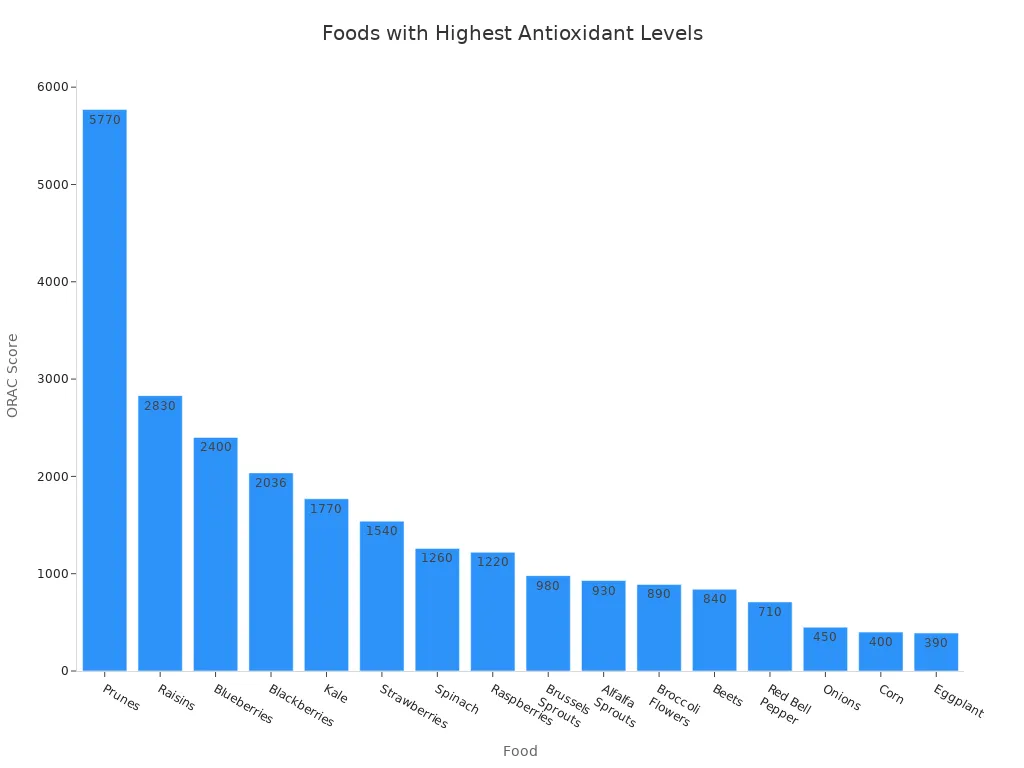
You get the most benefit when you eat a variety of fruits and vegetables every day. These foods give you a wide range of antioxidants that support your health.
You can boost your antioxidant intake with simple changes to your diet. Try these easy strategies:
Fill your plate with colorful fruits and vegetables at every meal.
Choose fresh foods instead of processed options.
Drink tea, especially green tea, for extra antioxidants.
Snack on nuts and seeds or add them to salads and yogurt.
Prepare smoothies with berries, spinach, and other antioxidant-rich foods.
Enjoy dark chocolate in moderation.
Tip: Small changes, like swapping soda for green tea or adding berries to your breakfast, can make a big difference.
You support your health best when you make antioxidant-rich foods a regular part of your meals. The table below gives you ideas for adding more antioxidants to your daily routine:
Meal Type | Foods Included |
|---|---|
Breakfast | Dark leafy greens, berries, nuts |
Lunch | Tuna, salmon, mixed vegetables |
Dinner | Beets, cherries, whole grains |
Snacks | Nuts, seeds, antioxidant-rich fruits |
You can also focus on seasonal fruits and vegetables for the highest antioxidant content. Coffee and tea serve as important sources of antioxidants, especially in cooler months. By making these foods a habit, you help your body stay strong and lower the risk of disease.
You can choose between natural and synthetic antioxidant supplements. Synthetic antioxidants provide a controlled and consistent composition. They remain stable longer than natural antioxidants, which can degrade over time. Synthetic options often suit sensitive skin because they are hypoallergenic and reduce the risk of allergic reactions. Natural antioxidants, such as chamomile and calendula, offer soothing properties and anti-inflammatory benefits. These natural choices work well for sensitive skin types.
Synthetic antioxidants deliver uniform efficacy.
Natural antioxidants provide extra benefits like calming and reducing inflammation.
You may wonder if you need antioxidant supplements. Most people get enough antioxidants from a balanced diet that includes fruits and vegetables. Medical guidelines suggest that supplements are not necessary for the general population. Some groups need special advice. Smokers should avoid beta-carotene supplements because they increase the risk of lung cancer. Patients should talk to healthcare professionals before starting any supplement.
Population | Recommendation |
|---|---|
Smokers | Should avoid beta-carotene supplements due to increased risk of lung cancer. |
General Population | Emphasis on obtaining antioxidants through a balanced diet rather than supplements. |
Patients | Should consult healthcare professionals for personalized advice regarding antioxidant intake. |
You must use antioxidant supplements safely. Always consult a healthcare professional before starting any supplement. High doses of antioxidants can cause health risks. Beta-carotene may increase cancer risk. Vitamin E in high doses can cause bleeding and higher mortality. The FDA does not regulate supplements for safety or effectiveness. Manufacturers do not need to prove their products are safe before selling them. High doses of vitamin C can cause digestive issues and interfere with cancer treatments. Patients with cancer should limit antioxidant supplement use, especially at high doses. Antioxidants are generally safe when used appropriately, but high doses can lead to serious side effects.
Minimize supplement use unless needed for nutritional needs or chronic disease therapy.
Be aware of possible side effects, such as decreased exercise adaptation and increased inflammation.
Understand that supplements may not replace the benefits of a diet rich in fruits and vegetables.
Tip: You support your health best by choosing a variety of antioxidant-rich foods and limiting supplement use.
You support your overall health when you include antioxidant-rich foods in your diet. Antioxidants neutralize free radicals and help prevent chronic diseases. Eating fruits and vegetables every day lowers inflammation and reduces long-term health risks.
Key Points | Description |
|---|---|
Role in Neutralizing Free Radicals | Antioxidant compounds protect cells from oxidative stress. |
Importance of Diet | A balanced diet with fruits and vegetables boosts well-being. |
Set a goal to add more colorful foods to your meals. Small changes lead to lasting benefits.
You find the highest levels in fruits and vegetables like berries, spinach, and kale. Nuts, seeds, and green tea also provide strong antioxidant support.
You usually meet your needs by eating a balanced diet with plenty of colorful produce. Supplements are not necessary for most people.
You protect your cells from damage when you consume antioxidants. These compounds fight free radicals and lower your risk of disease.
You should talk to your doctor before using supplements. Most people benefit more from whole foods than pills.
You may experience side effects if you take high doses of supplements. Stick to food sources to avoid problems.


