
Views: 0 Author: Site Editor Publish Time: 2025-10-29 Origin: Site


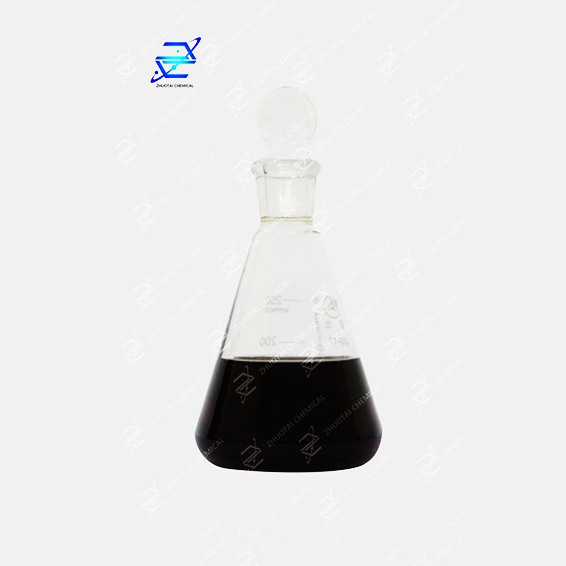
Dispersants are essential chemical agents used in various industries to maintain the stability and functionality of mixtures by preventing particles from clumping together. These substances help improve the performance and efficiency of products in many sectors, including lubricants, paints, and coatings. In this article, we will explore the role and importance of dispersants, focusing on their applications, benefits, and significance in different industries.
A dispersant is a substance that helps to disperse or break up solid particles that are typically suspended in a liquid. These particles can be solid or liquid and are often introduced to enhance the product’s performance. Dispersants play a crucial role in preventing particle aggregation, which can lead to clumping and sedimentation in various systems, ensuring the products remain stable and effective.
Dispersants are widely used in industries such as:
Lubricants: In lubricants, dispersants prevent the formation of sludge and deposits by keeping contaminants suspended.
Paints and Coatings: Dispersants help in the uniform distribution of pigments in paints and coatings, improving the texture and color consistency.
Pharmaceuticals: Used in suspensions to prevent the settling of active ingredients.
Agricultural Chemicals: They help in suspending pesticides and fertilizers, improving their effectiveness.
One of the primary applications of dispersants is in lubricants. They prevent the formation of sludge, which can occur when contaminants in the lubricant break down over time. Dispersants work by keeping these contaminants suspended, allowing them to be removed or filtered without causing any harm to the machinery. This application is especially important in engine oils and gear oils, where the accumulation of particles could lead to decreased performance and engine damage.
Prevent Sludge Formation: Helps in keeping contaminants suspended in the oil, preventing the formation of sludge and deposits.
Enhanced Lubricant Efficiency: Ensures that lubricants perform optimally, reducing wear and tear on machinery.
Increased Longevity: By maintaining the cleanliness of lubricants, dispersants extend the life of machinery.
In the paint and coating industry, dispersants are used to ensure that pigments are evenly distributed throughout the product. This helps in achieving smooth, consistent coverage, and it prevents the pigments from settling or clumping. The use of dispersants in paints is crucial for maintaining color consistency, gloss, and overall visual appeal.
Improved Pigment Distribution: Ensures uniform dispersion of pigments, resulting in consistent color and texture.
Enhanced Gloss and Durability: Prevents pigments from settling, ensuring that the finish remains glossy and durable.
Reduced Viscosity: Helps in achieving a more fluid consistency for easier application.
There are several types of dispersants, each designed to serve different purposes depending on the industry and application:
Polymeric Dispersants: These are used in systems where stability and uniform dispersion are essential, such as in paints, coatings, and adhesives.
Surfactant-Based Dispersants: Typically used in emulsions, these dispersants help maintain the stability of the mixture.
Solvent-Based Dispersants: Often used in the oil and gas industry, these are effective in preventing sedimentation in oils and fuels.
Dispersants work by reducing the surface tension between particles and the medium in which they are suspended. By adsorbing onto the surface of the particles, dispersants create a barrier that prevents them from aggregating. This ensures that the particles remain evenly distributed throughout the solution, preventing sedimentation or clumping. Dispersants can also modify the viscosity of a fluid, making it easier to apply in various applications.
Surface Interaction: The dispersant molecules adsorb onto the particle surfaces, creating a repulsive force that prevents aggregation.
Steric Stabilization: The dispersant molecules can create a physical barrier around the particles, preventing them from coming together.
Electrostatic Stabilization: Some dispersants work by imparting a charge on the particle surface, which causes particles to repel each other.
In recent years, there has been growing concern over the environmental impact of chemicals, including dispersants. Many traditional dispersants are petroleum-based and can be harmful to the environment if not properly handled. As a result, there is a significant push towards developing biodegradable dispersants that break down more easily in the environment, reducing the potential for long-term harm.
A dispersant is primarily used to prevent the aggregation or clumping of particles in a liquid. It helps to maintain the uniform distribution of solids, enhancing the stability and performance of various products.
Yes, dispersants are widely used in engine oils, gear oils, and hydraulic oils to prevent the buildup of sludge and contaminants.
Some dispersants can be harmful to the environment, especially those that are not biodegradable. However, many manufacturers are now producing biodegradable dispersants to minimize their environmental impact.
Dispersants in paints help ensure that pigments are evenly distributed, preventing settling and ensuring a consistent finish. This leads to improved color consistency and a more durable, glossy surface.
Dispersants are available in various types, including polymeric dispersants, surfactant-based dispersants, and solvent-based dispersants, each tailored to specific applications.
Dispersants play a crucial role in a wide range of industries by improving the stability and performance of products. Whether used in lubricants, paints, or pharmaceuticals, dispersants ensure that particles remain uniformly distributed, preventing aggregation and enhancing the overall effectiveness of the product. With the growing demand for eco-friendly alternatives, the future of dispersants looks promising with the development of biodegradable options that offer both performance and environmental safety.


